







Butane hash oil, or BHO, is the family of cannabis concentrates made by using butane — often blended with propane — to dissolve the resin out of cannabis and then removing that solvent. It is one of the dominant commercial methods for producing dabbable cannabis concentrates, and it’s the starting point for most of the products on a modern dispensary’s concentrate shelf: shatter, wax, budder, crumble, sauce, and exceptionally high-potency THCA diamonds. This guide covers what BHO is, how the process works, the forms it takes, how it’s tested, whether it’s safe, and how it compares to the solventless alternatives — with links to deeper articles on each piece along the way.
BHO sits within the broader world of cannabis extraction methods, alongside CO2, ethanol, and solventless approaches. What distinguishes the hydrocarbon route is a combination of efficiency, low operating temperature, and — when it’s done right — an unusually faithful preservation of the plant’s aroma.
What Is BHO?
BHO is concentrated cannabis resin extracted with a light hydrocarbon solvent. Butane and propane are low-polarity solvents with a strong affinity for cannabinoids and terpenes. Under controlled, low-temperature conditions, they extract relatively little chlorophyll and fewer polar plant constituents than solvents such as ethanol, helping produce a lighter-colored, less vegetal concentrate. The result, once the solvent is removed, is a potent concentrate that can test anywhere from roughly 70% to well over 90% cannabinoids, several times the potency of flower.
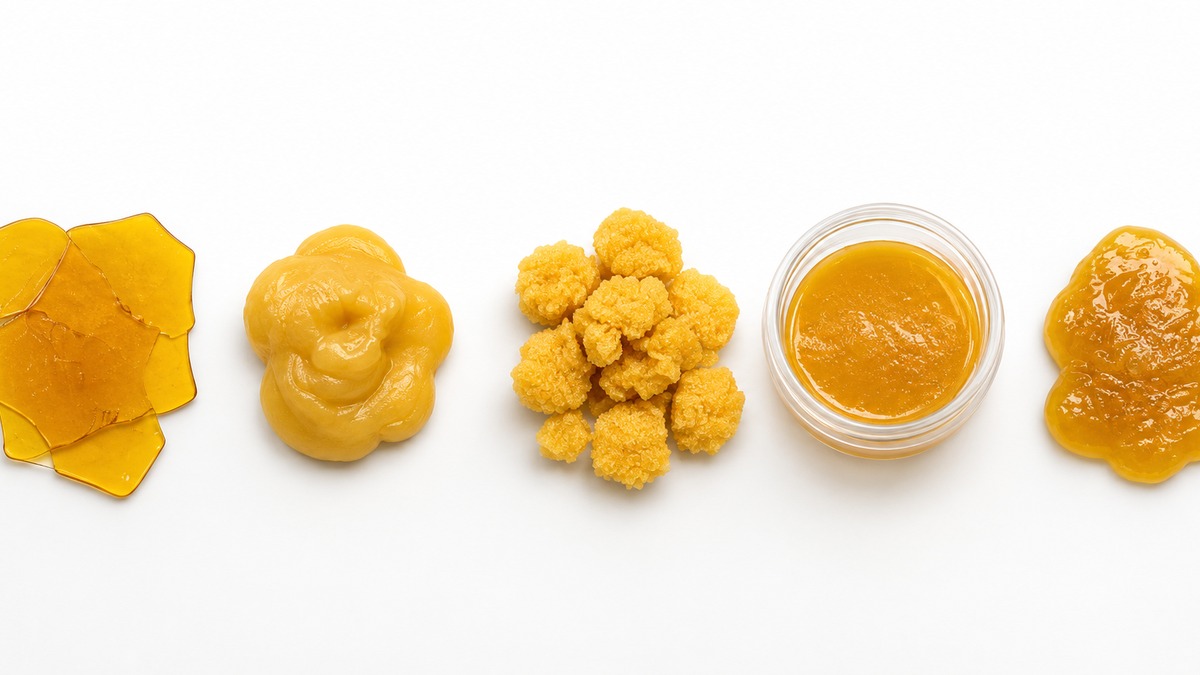
Bho extracts
The name is slightly narrower than the category. “Butane hash oil” technically refers to extract made with butane, but propane is frequently added to the mix, and pure-propane extract is sometimes called PHO, for propane hash oil. In practice the industry uses “BHO” loosely to cover the whole light-hydrocarbon family. Processors may use butane alone or blends containing propane to adjust solvent power, vapor pressure, operating temperature, and recovery behavior; the preferred blend depends on the equipment, starting material, and desired product rather than on a single universal ratio.
Why Hydrocarbons Extract What They Do
The reason butane works so well comes down to a basic principle of chemistry: like dissolves like. Cannabinoids and terpenes are largely non-polar, oil-soluble molecules, and butane and propane are low-polarity solvents — so the two have a natural chemical affinity. When liquid butane washes over cannabis, it readily pulls the resinous compounds out of the plant’s trichomes while co-extracting comparatively little of the polar plant constituents, sugars, salts, and much of the chlorophyll that can accompany less selective extraction conditions. That selectivity, aided by low operating temperatures, is why a well-made BHO extract can look clean and golden rather than dark and vegetal.
It also explains the different roles cannabinoids and terpenes play, because they behave very differently as the extract is concentrated. Terpenes are comparatively volatile and can be lost through heat, vacuum, and prolonged exposure to air — and not only lost: under heat they can convert into other compounds entirely, a question chemist Robert Strongin has studied in concentrates. THCA is much less volatile, and it can crystallize when its concentration exceeds its solubility and suitable nucleation conditions develop — the mechanism behind THCA diamonds, and one that depends on concentration, temperature, and time rather than simply on molecular weight. Many production decisions therefore involve balancing solvent removal, terpene retention, viscosity, nucleation, and final cannabinoid concentration. The whole craft of extraction is managing those variables deliberately rather than by accident.
How Does BHO Extraction Work?
Professional BHO production uses a sealed system called a closed-loop extractor. Chilled liquid butane is passed through columns packed with cannabis, dissolving the cannabinoids and terpenes and carrying them into a collection vessel. The system then recovers the solvent — warming it so it evaporates, travels back through the loop, and is condensed for reuse rather than released — which is both an economic feature and a safety one. What’s left in the collection pot is a solvent-laden crude oil that still has to be purged before it’s safe or finished.
The details of the equipment, the recovery step, and the all-important purge are enough to fill their own article; our guide to the closed-loop extraction process covers how a professional system contains and reclaims the solvent and why the purge is the stage that most determines the final product. The short version: purging uses controlled heat and vacuum to drive off the residual butane until it falls below safety thresholds, and the exact conditions of that purge — temperature, vacuum, agitation, time — are what steer a single starting oil toward one texture or another.
The Forms BHO Takes
Many hydrocarbon concentrates begin with a similar extraction, but their final form depends on several variables: starting material, cannabinoid and terpene composition, temperature, agitation, solvent-removal conditions, nucleation, and post-extraction processing.
Shatter is the glassy, brittle, translucent form, made by leaving the oil undisturbed as it stabilizes into a flat sheet. Our article on what shatter is and how it’s made covers why it snaps like hard candy and how it differs from the softer textures.
Wax, budder, and crumble are the opaque, softer forms. Agitation and controlled heating can encourage nucleation and the formation of microscopic crystalline or semi-crystalline domains, which scatter light and produce a softer, opaque texture. Our piece on BHO wax explains why the same oil can look like amber glass or cake frosting depending on how it’s handled during processing — and why opaque doesn’t mean impure.
THCA diamonds sit at the crystalline extreme, where nearly pure THCA is coaxed out of a supersaturated solution into large, faceted crystals sitting in a pool of terpene-rich sauce. How THCA diamonds form walks through the self-purifying crystallization that pushes them past 95% purity.
Live resin is defined by its starting material rather than its texture: cannabis frozen fresh at harvest, before drying and curing can strip away the most volatile terpenes. For a closer look at why fresh-freezing produces such aromatic concentrates — and whether live resin actually gets you higher — see our full live resin guide.
A Short History of Hydrocarbon Extraction
Solvent extraction with hydrocarbons is not a cannabis invention, and it’s not new. Light hydrocarbons have been used in the food and botanical industries for the better part of a century — hexane, for instance, has long been used to extract cooking oils from seeds like soybeans, and butane and propane are used to pull aromatic oils from hops, spices, and citrus. The underlying chemistry BHO relies on is well-established industrial practice.
Cannabis-specific hydrocarbon extraction took off much more recently, and its early reputation was shaped by its worst practitioners. Through the late 2000s and early 2010s, much of the BHO that reached consumers was made by “open blasting” — spraying butane through a tube packed with cannabis in the open air, with no way to contain or reclaim the solvent. The results were inconsistent, often under-purged, and the practice caused a wave of fires and severe burns that attached a lasting stigma to the whole category. The modern closed-loop era — sealed systems, solvent recovery, mandatory residual-solvent testing, and licensed facilities — is what separated the professional product from that dangerous origin. Much of the “BHO isn’t clean” reputation is a holdover from the open-blasting days rather than a fair description of what a tested, professionally made concentrate is today.
Is BHO Safe?
This is where the reputation and the reality diverge, and it’s worth being precise. A compliant, professionally produced BHO concentrate — extracted in a licensed facility with a closed-loop system, purged correctly, and verified by lab testing — should contain residual hydrocarbons below the applicable regulatory action limits, greatly reducing solvent-related exposure compared with untested or improperly purged products. The danger in BHO is largely a story about how and where it’s made, rather than about butane as a molecule.
That precision matters, because the old shorthand that “if there’s no flame, there’s no risk of combustion” is dangerously wrong. Butane vapor is heavier than air and can pool invisibly near the ground, where a spark, static discharge, electrical equipment, or sufficiently hot surface can ignite it — even when no open flame is present. This is exactly why amateur “open blasting” outside a sealed system causes so many fires and severe burns, and why unlicensed hydrocarbon extraction is illegal in many jurisdictions and can carry serious criminal penalties. A professional closed-loop system exists precisely to keep the flammable solvent contained and recovered rather than venting into a room.
For the consumer, the takeaway reduces to one habit: buy tested product. The extraction category alone does not establish product purity — residual solvents, pesticides, microbial contamination, degradation products, formulation ingredients, and laboratory verification all need to be evaluated separately. Because butane is volatile and flammable, any BHO destined for consumption has to pass residual-solvent testing to confirm the solvent has been purged to safe levels, and regulated markets generally require batch testing for solvents, pesticides, and microbial contamination. That verification, not the look of the product, is what separates safe concentrate from a gamble. The way pesticides and other contaminants can become concentrated during extraction — and how producers test for and manage them — is a subject in its own right worth understanding before trusting any concentrate’s purity.
How Is BHO Tested?
Testing is what turns a claim of purity into a verified fact, and for concentrates it matters more than for flower, because extraction concentrates whatever was in the starting material — the good and the bad alike. A batch-specific certificate of analysis (COA) should confirm cannabinoid potency close to the label, screen for residual solvents against established regulatory limits, and check for pesticides and microbial contaminants.
State regulators establish their own residual-solvent action levels, and those limits vary substantially between jurisdictions — there is no single national standard, and the specific ceilings differ by state, by product category, and even between marijuana and hemp rules. A batch-specific COA should therefore be read against the rules of the market where the product is sold. What holds across regulated markets is that the finished product must test below the applicable action limit, although actual residual levels vary with the process and product. The deeper question of why a given solvent pulls some compounds and not others — the chemistry of solvent polarity — shapes both what ends up in the extract and what has to be tested for. It’s also why some producers reach for ethanol-based approaches for certain products, a different solvent chemistry with its own tradeoffs.
BHO vs. CO2 Extraction
The other major solvent method in commercial cannabis is supercritical CO2 extraction, and the two make different tradeoffs. CO2 extraction uses carbon dioxide held at high pressure in a state between liquid and gas as the solvent, and because it leaves the extract readily when pressure is released, it doesn’t create the same persistent residual-hydrocarbon concern that butane does. That means no hydrocarbon purge to validate and, in some regulatory environments, simpler compliance.
CO2 systems are highly tunable, but oils intended for cartridges or formulated products frequently undergo substantial downstream refinement — often including winterization to remove waxes and lipids — which can reduce or alter the native volatile profile. Hydrocarbon extraction is therefore often favored for terpene-rich dabbable products, while CO2 remains useful for producers prioritizing process tunability and refined oils. Neither method is automatically cleaner. That depends on process control, downstream refinement, and the laboratory results for the finished product.
BHO for Edibles
Not every product is meant to be dabbed. For edibles, the calculus shifts again, and the BHO-versus-CO2 question turns out to matter less than most people assume — because much of the market runs on distillate refined a step beyond either. Our article on the best extraction for edibles covers why extraction origin fades into near-irrelevance once oil is distilled for a gummy, and where it still matters.
BHO vs. Solventless
The sharpest comparison in concentrates is between BHO and rosin — the solventless product pressed from cannabis with heat and pressure, no hydrocarbon involved. Neither wins outright; they trade off on potency, terpene preservation, purity, yield, and price in mostly predictable ways. Our head-to-head on BHO vs. rosin works through what the chemistry actually determines, and why a well-made live resin and a well-made live rosin often land closer together than the usual framing suggests.
The Bottom Line
BHO is not one product but a method — a light-hydrocarbon extraction that, when performed in a sealed system and verified through appropriate testing, can produce highly potent, terpene-rich concentrates. The forms found on a dispensary menu reflect differences in starting material, composition, solvent removal, crystallization, agitation, and other post-extraction processing. And across all of them, the same rule holds: the certificate of analysis, not the appearance or the price, is what tells you what you’re actually getting.
Whichever form you’re looking at, the pieces linked throughout this guide go deeper on each — from the closed-loop process that makes it, to the individual product types, to how it compares with the solventless alternatives.
This guide began as an earlier Terpenes & Testing article, “BHO Extractions: What’s Up With Hydrocarbons.” It was substantially rewritten and expanded in July 2026 to correct outdated safety and chemistry claims, add current testing context, and connect it to our full series on butane hash oil.