

Editor’s note (November 2026): This article covers a single laboratory study in bladder cancer cell lines; no animals or people were treated. As of November 2026, we found no published animal or human study of CBC for bladder cancer. We have corrected parts of the original text, updated the statistics, and merged in our February 2022 article on the same study, “Anticancer Properties of THC and CBC.”
Bladder cancer is expected to cause about 17,870 deaths in the United States in 2026, according to American Cancer Society projections, and it is the fourth most common cancer among men (key statistics). Cannabis holds many compounds that researchers are studying for the treatment of cancer. With that in mind, scientists have started testing cannabinoids like cannabichromene (CBC) against bladder cancer cells in the lab.[1]
Earlier research had pointed to the CB2 receptor. In a 2017 study, both cannabinoid receptor type 1 (CB1) and CB2 were found in bladder cancer specimens, but only CB2 was more highly expressed in tumor tissue than in normal tissue. In the same study, drugs that activate CB2 (CB2 agonists) slowed the growth and movement of bladder cancer cells in the lab.[2]
When speaking about CB2 agonists, cannabinoids are bound to come into the conversation. But while cannabidiol (CBD) and tetrahydrocannabinol (THC) are usually the central topics, a 2021 study put CBC in the spotlight.
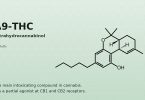
The scientists set out to identify the active plant ingredients (API) in an extract of a CBD-rich cultivar and test their toxicity to two human bladder cancer cell lines, T24 and HTB-9.[1] They split the crude extract into fractions and found that fraction 7 (F7), containing CBC and THC in a ratio of about 6:1, was the most active. A high-CBD fraction was also significantly effective.
CBC and THC worked synergistically: together, they killed more cancer cells than would be expected from each alone, an example of what is often called the entourage effect. The combination caused cell-cycle arrest and increased apoptotic (programmed) cell death.[1] Using drugs that block each receptor, the researchers found that blocking CB2 completely prevented the toxic effect of CBC + THC and of CBD, while blocking CB1 had a smaller effect.[1]
The treatments also raised the cells’ production of CB1 and CB2 receptors. Because higher levels of these receptors had been linked to better outcomes in patients with liver cancer in an earlier study,[3] the scientists speculated that this increase could create a positive feedback loop that strengthens the anti-cancer effect. That idea has not been tested.
Finally, “CBC + THC or CBD treatments inhibited cell migration and affected F-actin integrity.”[1] Actin filaments help cells move, which is one of the steps in how cancers spread. In a test of how far cells crawl across a dish, CBC + THC and CBD slowed the cells more than mitomycin-C, a chemotherapy drug used for bladder cancer. In a test of how well cells push through a membrane, the cannabinoid treatments had only a small effect, while mitomycin-C was much stronger.[1]
The researchers concluded that these compounds showed cytotoxic and synergistic activity against bladder cancer cell lines, and that preclinical studies and clinical trials are needed to find out whether they could work as a treatment.[1]
References
- Anis O, Vinayaka AC, Shalev N, et al. Cannabis-derived compounds cannabichromene and Δ9-tetrahydrocannabinol interact and exhibit cytotoxic activity against urothelial cell carcinoma correlated with inhibition of cell migration and cytoskeleton organization. Molecules. 2021;26(2):465. doi:10.3390/molecules26020465
- Bettiga A, Aureli M, Colciago G, et al. Bladder cancer cell growth and motility implicate cannabinoid 2 receptor-mediated modifications of sphingolipids metabolism. Sci Rep. 2017;7:42157. doi:10.1038/srep42157
- Xu X, et al. Overexpression of cannabinoid receptors CB1 and CB2 correlates with improved prognosis of patients with hepatocellular carcinoma. Cancer Genet Cytogenet. 2006;171(1):31-38. doi:10.1016/j.cancergencyto.2006.06.014
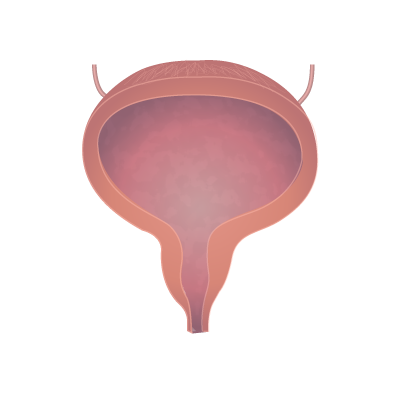
Image credit: Bladder, by DBCLS, via Wikimedia Commons, CC BY 4.0.
This article is an educational summary of published research. It is not medical advice.