






At a glance
- Terpenes are compounds that help give cannabis — and many other plants — their characteristic aromas and flavors.
- Terpenoids are closely related compounds whose chemical structures have been modified, most often through the addition of oxygen-containing functional groups.
- Terpenes are not the main intoxicating compounds in cannabis, although researchers are studying whether they may influence its effects.
- Genetics, cultivation, harvest, processing, and storage all shape the terpene profile measured in a finished product.
- Strain names and indica/sativa labels are unreliable guides to chemistry; a recent, batch-specific certificate of analysis is more informative.
Cannabis owes much of its character to terpenes. Two flowers can carry nearly identical THC numbers and still smell and taste remarkably different — and many users report that they feel different, too. Cannabis terpenes clearly shape the sensory difference and may contribute to the experiential one, although that second possibility remains under investigation. These compounds give each chemical profile much of its sensory identity, independently of its headline THC percentage. This guide maps the subject: what terpenes are, what the evidence does and does not support, the major compounds worth knowing, and where to explore each topic in greater depth.
On this page: What terpenes are · The entourage effect · Common questions · Common and notable terpenes · Other terpenes · Go deeper
What are terpenes and terpenoids?
Terpenes are a large, diverse class of organic compounds, many of which are volatile and aromatic, found throughout the plant world — and in some fungi, microorganisms, and insects. Plants build them as chemical tools: some repel herbivores, some summon the predators of those herbivores, and many simply make a flower attractive to pollinators. They are major constituents of most essential oils, and the reason a pine forest, a lemon peel, and a lavender field each smell the way they do.
The terminology is worth getting right. A terpene is a hydrocarbon constructed from five-carbon isoprene units. A terpenoid is a terpene-derived compound whose structure has been modified — most commonly through the addition of oxygen-containing functional groups, though rearrangement and other modifications also occur.
You will also encounter isoprenoid. In practice, terpene, terpenoid, and isoprenoid are used with overlapping and inconsistent meanings across disciplines, and much cannabis writing treats them as interchangeable. The underlying isoprene-based classification is well established; the vocabulary around it is not. Explore our guide to the science of terpenes for a deeper look at the terminology.
A cultivar’s genetics help determine which terpenes it can produce, but cultivation conditions, plant maturity, harvest timing, drying, curing, storage, and even analytical method all shape the profile that ultimately reaches the lab. Thousands of terpenes exist in nature; a few dozen appear in cannabis with any regularity, and a smaller handful dominate most profiles. This interplay of place and growing conditions on a plant’s chemistry is known as cannabis terroir.
Why terpenes matter: the entourage effect
The reason terpenes draw so much attention isn’t only aroma — it’s the possibility that they shape how cannabis actually works.
The term entourage effect was introduced in 1998 by Shimon Ben-Shabat, Raphael Mechoulam, and colleagues to describe interactions among compounds in the endocannabinoid system, where inactive fatty-acid derivatives enhanced the activity of the endocannabinoid 2-AG. Ethan Russo later popularized the broader hypothesis — most influentially in his paper on phytocannabinoid-terpenoid synergy — that cannabinoids and terpenes in cannabis may likewise modify or enhance one another’s effects.
That broader version is compelling, and it is still being worked out. Earlier receptor studies found that common cannabis terpenes did not meaningfully modulate THC activity at CB1 or CB2, while more recent laboratory work has reported direct, dose-dependent cannabinoid-receptor activation by certain terpenes. Real-world chemovar data hint that terpene content tracks with patient-reported outcomes. But these remain laboratory and observational findings rather than demonstrations of clinically meaningful synergy in cannabis as consumed.
Some popular versions of the story don’t survive scrutiny at all. The widely repeated claim that myrcene opens the blood-brain barrier to escort cannabinoids into the brain has no peer-reviewed evidence behind it. Our guide to terpene effects and therapeutics examines the evidence — and its limitations — in detail.
Common questions about terpenes
Do terpenes get you high?
Not by themselves, in the conventional THC sense. Some terpenes may have pharmacological or sensory effects at sufficient doses, but they are not the principal intoxicating compounds in cannabis.
Are terpenes unique to cannabis?
No. Cannabis produces many familiar terpenes, but these compounds are widespread in plants, fungi, and microorganisms and also occur in some animals. Pine, citrus, lavender, hops, and black pepper owe parts of their characteristic aromas to many of the same molecules.
Do strain names predict terpene profiles?
Not reliably. Large-scale commercial testing has found that familiar marketing labels align poorly with underlying chemistry, and indica/sativa categories are inconsistent predictors of chemical composition. A recent, batch-specific certificate of analysis is far more informative than a strain name.
How are terpenes measured?
Usually by gas chromatography, commonly coupled with mass spectrometry or flame-ionization detection. Because terpenes are volatile, sample handling and method choice materially affect the result. Our terpene analysis and testing guide explains how laboratories measure these compounds.
Does the most abundant terpene matter most?
Not necessarily. Odor thresholds differ enormously between compounds, so a terpene present in trace amounts can still make a noticeable contribution to a cultivar’s aroma. Abundance may matter, but it is not the same thing as sensory impact or biological importance.
Common and notable cannabis terpenes
These are some of the compounds most commonly encountered on cannabis laboratory reports, along with several others notable for their chemistry or biological roles. Large profile studies repeatedly identify compounds such as myrcene, limonene, pinene, caryophyllene, humulene, linalool, terpinolene, and terpineol, but the exact hierarchy varies considerably between samples.
| Terpene | Class | Aroma | Also found in |
|---|---|---|---|
| α-Pinene | Monoterpene | Pine, resin | Pine, rosemary, parsley |
| Myrcene | Monoterpene | Earthy, clove, fruity | Hops, mango, lemongrass |
| Limonene | Monoterpene | Citrus peel | Citrus, juniper, dill |
| β-Caryophyllene | Sesquiterpene | Black pepper, spice | Pepper, cloves, hops |
| Linalool | Monoterpenoid | Floral, lavender | Lavender, bergamot, basil |
| Terpinolene | Monoterpene | Woody, herbal, citrus | Nutmeg, sage, conifers |
| α-Humulene | Sesquiterpene | Hoppy, woody | Hops, ginger, basil |
| Ocimene | Monoterpene | Sweet, herbal, woodsy | Mint, basil, mango |
| Terpineol | Monoterpenoid | Lilac, apple blossom | Pine, eucalyptus, sage |
| Borneol | Monoterpenoid | Herbal, camphor | Valerian, ginger, mugwort |
| Nerolidol | Sesquiterpenoid | Wood, citrus, floral | Jasmine, tea tree, ginger |

α-Pinene
A bicyclic monoterpene and one of the most widely distributed terpenes in the plant kingdom, a major contributor to the smell of conifer forests. It has been investigated for bronchodilatory, anti-inflammatory, and memory-related effects, largely in preclinical research and in studies of terpene-containing preparations rather than isolated α-pinene.
Read the chemistry of pinene, how its two isomers differ, or pinene’s role in forest medicine.

Myrcene
Often among the most abundant terpenes in cannabis, and a defining note in hops. Its reputation for sedation and “couch-lock” is far more established in popular writing than in human research.
Start with Myrcenewhy the myrcene sedation story outruns its evidence.

Limonene
The monoterpene behind citrus peel, and one of the most recognizable aromas in cannabis. It is used experimentally as a transdermal penetration enhancer, helping other compounds cross the skin.
β-Caryophyllene
One of the most common sesquiterpenes in cannabis and a major contributor to black pepper’s woody, spicy aroma. It is especially notable as a dietary terpene that acts as a selective agonist of the CB2 cannabinoid receptor.
Read the β-caryophyllene profile or why it counts as a dietary cannabinoid.

Linalool
A monoterpenoid alcohol and the floral heart of lavender. It is one of the most extensively studied terpenes for calming and anxiety-related effects, though much of the human research examines lavender oil preparations containing several compounds rather than purified linalool.
Read the linalool profile.
Terpinolene
A monoterpene with a complex woody-herbal-citrus character, found prominently in certain chemovars including many products sold as Jack Herer. It has shown antioxidant activity and sedative-like effects in preclinical experiments.
α-Humulene
A sesquiterpene and structural isomer of β-caryophyllene, shared between cannabis and hops, where it contributes the classic “hoppy” aroma. It has demonstrated antioxidant and anti-inflammatory activity in preclinical models.
Read the humulene profile or humulene’s role in beer and cannabis.
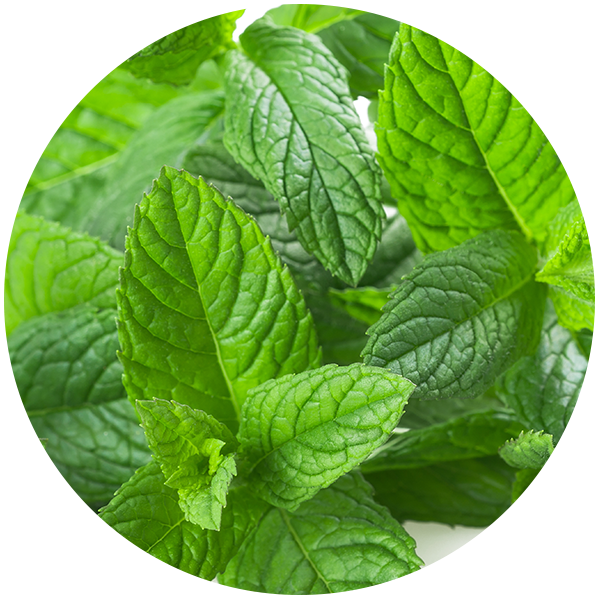
Ocimene
An acyclic monoterpene occurring as several isomers, with a role in plant defense signaling: (E)-β-ocimene is released by some plants after herbivore attack and contributes to volatile blends that attract predatory mites and other natural enemies.
Terpineol
A monoterpenoid alcohol existing as four structural isomers, carrying soft lilac and apple-blossom notes, and frequently appearing alongside pinene in the same cultivars.
Read the terpineol profile.
Borneol
A bicyclic monoterpenoid with herbal, camphor-like character, long used in traditional Chinese medicine. It has been investigated in preclinical drug-delivery research as a potential enhancer of blood-brain barrier permeability.
Read the borneol profile.

Nerolidol
A sesquiterpenoid blending wood, citrus, and floral notes, also released by plants as a herbivore alarm signal. In one exploratory chemovar study, trans-nerolidol correlated with greater patient-reported anxiety relief, although the finding has not been established in controlled human trials.
Read the nerolidol profile.
Other cannabis terpenes and terpenoids
A full laboratory report usually lists a long tail of additional compounds. Each has its own profile:
- Geraniol — A sweet, rose-like monoterpenoid found in geraniums, citronella, and cannabis. It contributes to the insect-repellent activity of several essential oils.
- Phellandrene — A monoterpene occurring as alpha and beta isomers, with mint, citrus, and peppery notes; also found in eucalyptus and ginger.
- Sabinene — A bicyclic monoterpene combining pine, orange, and spice; a major component of black pepper and juniper berry oils.
- α-Bisabolol — A sesquiterpene alcohol and a characteristic aromatic component of chamomile.
- Farnesene — A family of acyclic sesquiterpenes with green, woody, and apple-like notes. One member, (E)-β-farnesene, functions as an alarm pheromone in many aphid species.
- Terpinene — A group of monoterpene isomers (α-, γ-, and others) with fresh, citrusy, herbal character; common in tea tree oil.
- Valencene — A citrus-scented sesquiterpene named for Valencia oranges and abundant in several citrus oils.
- Fenchol — A monoterpenoid alcohol with an earthy, camphor-like basil note.
- Eucalyptol — Also called 1,8-cineole, a monoterpenoid ether responsible for the cooling, minty character of eucalyptus.
- Caryophyllene oxide — The oxidized derivative of β-caryophyllene, which can form and increase as plant material is exposed to oxygen during storage.
- Guaiol — A sesquiterpenoid alcohol found in guaiacum, cypress, and palo santo. In one analysis of cannabis cultivars it stood out as the terpene most consistently associated with anxiety-provoking varieties rather than calming ones.
- Camphene — A bicyclic monoterpene with a damp, pungent, pine-like note, found in conifer and citrus oils.
- Camphor — A monoterpenoid from camphor laurel, rosemary, and sage that produces a cooling sensation on skin comparable to menthol.
- Carene — Also called delta-3-carene, a bicyclic monoterpene with a sweet, pungent character and a main constituent of pine and cedar resin.
- Cymene — Found in cumin and thyme oils, and one of the few genuinely aromatic terpenes in the strict chemical sense, carrying a benzene ring.
- Cedrene — A sesquiterpene present in cedar essential oil.
- Geranyl acetate — An ester of geraniol with a strong floral, fruity aroma, found in citronella, lemongrass, and rose oils.
- Pulegone — A monoterpenoid with a peppermint aroma and insecticidal activity. It has drawn regulatory attention over toxicity concerns at higher exposures.
- Isopulegol — A monoterpenoid alcohol and a chemical precursor to menthol.
- Phytol — A diterpene alcohol with a light floral aroma, formed in plants as chlorophyll degrades.
- Menthol — The cooling monoterpenoid of the mint family, which acts on TRPM8, the body’s main detector of environmental cold.
- Germacrone and α-Muurolene — Minor sesquiterpenes that round out complex profiles.
Beyond cannabis: T&T also covers the wider world of terpenes and terpenoids — the earthy geosmin that contributes to the smell after rain, skincare’s squalene, the triterpenes of reishi mushrooms, menthol, and eugenol. Those are covered in our guide to the science of terpenes.
→ Explore all terpene profiles
Go deeper
This guide is the starting point. Four specialized sections explore the subject in greater depth:
- Terpene Profiles — a dedicated, fully cited profile for each compound: chemistry, aroma, evidence, and the chemovars and tested products in which it commonly appears.
- The Science of Terpenes — biosynthesis, terpene synthase enzymes, chemical classes, and how the plant actually builds these molecules.
- Terpene Effects & Therapeutics — the research on anxiety, pain, inflammation, and the entourage effect, graded honestly by evidence strength.
- Terpene Analysis & Testing — how labs actually measure a terpene profile, from GC-MS methods to the challenges of quantifying volatile compounds. This is where the Testing in our name lives.
One practical point connects the science to the shelf: terpenes are volatile and chemically fragile. Heat, light, oxygen, and time can change or reduce a product’s terpene profile, which is why extraction conditions, packaging, and storage matter to both producers and consumers. Our guide to how temperature, vapor pressure, and processing affect common cannabis terpenes covers what actually survives, and why the boiling-point charts in circulation get it backwards.
Originally published March 2017. Updated July 2026 to correct the entourage-effect history, grade therapeutic claims by evidence strength, and add a full terpene directory.
These statements have not been evaluated by the FDA and are not intended to diagnose, treat or cure any disease. Always check with your physician before starting a new dietary supplement program.
This article was researched and fact-checked using DeepWeed, T&T’s cannabis research database. Explore the underlying studies and evidence summaries there.