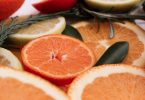



Valencene is a sesquiterpene: a 15-carbon hydrocarbon (C15H24) built from three isoprene units, and an aroma component of citrus fruits.[1] Traditionally extracted from Valencia orange oil, valencene is now also produced through microbial fermentation, and its citrus scent makes it a staple of flavors, fragrances, drinks and personal-care products.[1,2] It is also found in cannabis. For how sesquiterpenes differ from the smaller monoterpenes, see our guide to terpene terminology.
From Orange Peel to Fermentation Tank
Valencene sits mostly in the peel. One analysis found about 12.84 mg per kilogram in orange peel against 0.08 mg in the flesh, and yields from fruit vary with the harvest.[2] That makes extraction expensive. Toine Janssen, then chief executive of the Dutch biotech company Isobionics, put it memorably in 2010: about two trucks’ worth of oranges are needed to make one litre of valencene.[3]
Fermentation is the answer the industry has turned to. Microbes engineered with a valencene synthase gene can make the compound from sugar, independent of citrus harvests. One engineered yeast strain reached 16.6 grams per litre in a 15-litre bioreactor—the highest published titre reported in recent reviews.[2]
Valencene in Cannabis
Valencene is a genuine cannabis constituent. Among the terpene synthases characterized from the hemp variety ‘Finola’ in 2017, valencene appeared among the enzymes’ products.[4] A 2023 study of the dried flower of six commercial strains confirmed valencene against an authentic standard, alongside the better-known sesquiterpenes beta-caryophyllene and humulene.[5]
Online lists of “high-valencene” strains are best treated with caution: strain names are a poor guide to chemistry (our look at the terroir of cannabis explains why), and the only reliable way to know whether a given batch contains measurable valencene is through batch-specific testing with a terpene panel that actually includes it. For how labs measure terpenes in the first place, see how labs test for terpenes.
Nootkatone: What Valencene Becomes
Selective oxidation can convert valencene into nootkatone.[2] Nootkatone has a career of its own. It occurs in minute amounts in grapefruit skin and Alaska yellow cedar, and it is responsible for much of grapefruit’s smell and taste. In August 2020 the US Environmental Protection Agency registered nootkatone as a new active ingredient for insecticides and insect repellents, after the Centers for Disease Control and Prevention found that it repels and kills ticks, mosquitoes and other biting pests.[6]
In a 2019 study, nootkatone activated the energy-sensing enzyme AMPK in drug-resistant lung-cancer cells and made them more vulnerable to adriamycin. In mice carrying these tumors, the combination slowed tumor growth more than either treatment alone.[7] This remains preclinical research, and the findings concern nootkatone—not valencene itself.
What the Research Shows
Skin inflammation. The most detailed valencene study is in atopic dermatitis, a chronic, itchy inflammatory skin condition. Researchers isolated valencene from the rhizomes of Cyperus rotundus (purple nutsedge) and applied it to the skin of NC/Nga mice, a strain prone to eczema-like lesions, three times a week for ten weeks. Compared with mice given the irritant alone, treated mice scratched less and had lower lesion scores, lower blood IgE, and lower levels of several inflammatory signalling molecules in the skin. In cultured human keratinocyte cells, valencene damped inflammatory signals involved in recruiting immune cells.[8] The groups were small, four mice each, and the result has not been tested in people: we found no published clinical trial of valencene in humans.
Insects. A 2024 review notes that valencene itself has shown insect-repellent activity in laboratory tests, including against the red flour beetle.[2] Here the better-established compound is its oxidation product, nootkatone.
Safety. The joint FAO/WHO expert committee on food additives evaluated valencene in 2004 and found “no safety concern at current levels of intake when used as a flavouring agent.”[9] That finding covers the small amounts in food, not concentrated doses.
Valencene is established as a citrus aroma compound, a fermentation-made flavour ingredient, the raw material for nootkatone, and a volatile constituent of cannabis. Its own biomedical record rests largely on one small mouse study of eczema-like skin inflammation, supported by cell experiments. That provides a reason for further research, but no clinical evidence of benefit in humans. For how valencene fits into the wider family, our terpene education hub has the map.
References
- CannabisDB (Cannabis Compound Database). Valencene (CDB000674). Record updated December 7, 2020.
- Song Y, Liu H, Quax WJ, Zhang Z, Chen Y, Yang P, Cui Y, Shi Q, Xie X. Application of valencene and prospects for its production in engineered microorganisms. Front Microbiol. 2024;15:1444099. doi:10.3389/fmicb.2024.1444099
- Isobionics develops ‘breakthrough’ fermentation process for Valencene. CosmeticsDesign. June 9, 2010.
- Booth JK, Page JE, Bohlmann J. Terpene synthases from Cannabis sativa. PLoS ONE. 2017;12(3):e0173911. doi:10.1371/journal.pone.0173911
- Kaur J, Sun N, Hill JE. Comprehensive profiling of terpenes and terpenoids in different cannabis strains using GC × GC-TOFMS. Separations. 2023;10(9):500. doi:10.3390/separations10090500
- Centers for Disease Control and Prevention. Nootkatone now registered by EPA. Press release, August 10, 2020.
- Hung LVM, Moon JY, Ryu JY, Cho SK. Nootkatone, an AMPK activator derived from grapefruit, inhibits KRAS downstream pathway and sensitizes non-small-cell lung cancer A549 cells to adriamycin. Phytomedicine. 2019;63:153000. doi:10.1016/j.phymed.2019.153000
- Yang IJ, Lee DU, Shin HM. Inhibitory effect of valencene on the development of atopic dermatitis-like skin lesions in NC/Nga mice. Evid Based Complement Alternat Med. 2016;2016:9370893. doi:10.1155/2016/9370893
- Joint FAO/WHO Expert Committee on Food Additives (JECFA). Valencene (JECFA No. 1337). Evaluation, 2004.
Editor’s note: This article was originally published on December 11, 2020, by Derek Johnson. In October 2026 the editors rebuilt it on the same page. The original’s atopic dermatitis study is retained and described in detail; its nootkatone cancer reference is corrected and completed, and the list of “high-valencene” strains, which we could not trace to published analyses, has been removed. New sections cover valencene production, its presence in cannabis, nootkatone, and safety.
Last updated October 2026 · Originally published December 11, 2020.