






Last updated on August 18, 2026 · Originally published November 8, 2020
Eucalyptol has more human clinical trial evidence behind it than most terpenes discussed in cannabis. Not for the reasons most terpene articles suggest.
If eucalyptol sounds familiar, it is because you are probably thinking of eucalyptus — eucalyptol is a major constituent of the essential oil of many eucalyptus species.
It is also one of the terpenes most likely to already be in your medicine cabinet. It appears in cough drops, chest rubs and mouthwash, and in Germany it is sold as a licensed pharmaceutical under the name Soledum. That regulatory history means eucalyptol has been through the kind of testing most terpenes never receive.
What is eucalyptol, chemically?
Eucalyptol is better known in the literature as 1,8-cineole, and the two names refer to the same molecule.
It is a monoterpenoid rather than a monoterpene, and the distinction is structural. Where a terpene like limonene is pure hydrocarbon, eucalyptol carries an oxygen atom bridged across its ring — an ether, sometimes called an oxide. It is not an alcohol; there is no hydroxyl group. That bridged oxygen is what makes it a terpenoid and shapes how it behaves, including its solubility and its interaction with receptors.
Besides eucalyptus, it occurs in rosemary, sweet basil, sage, mint, tea tree, bay leaves, and in certain cannabis cultivars.
What does the human evidence actually show?
The human evidence for eucalyptol is almost entirely about respiratory conditions, and it is where the compound separates itself from the rest of the terpene field.
Most terpene research is cell culture and rodent work. Eucalyptol has been through randomized, double-blind, placebo-controlled trials in patients.
The most striking is a 2003 trial in bronchial asthma. Thirty-two patients with steroid-dependent asthma received either 200 mg of 1,8-cineole three times daily or placebo for twelve weeks, while their oral steroid dose was reduced in stages. The trial was designed to measure a steroid-sparing effect — whether the compound would let patients hold their asthma control on less prednisolone. Daily prednisolone dose fell by 36% in the cineole group against 7% on placebo, and 12 of 16 patients on cineole managed a reduction compared with 4 of 16 on placebo.
Larger trials followed. A six-month placebo-controlled study in 247 patients with asthma already on medication found significant improvement in lung function, symptoms and quality of life when cineole was added. Further placebo-controlled trials have examined acute non-purulent rhinosinusitis, acute bronchitis, and chronic obstructive pulmonary disease, where cineole reduced exacerbations.
Laboratory work suggests that it reduces inflammatory mediator production and mucus hypersecretion.
None of this makes eucalyptol a cure for anything, and much of the evidence comes from overlapping investigators studying the same commercial product. But it is a materially different class of evidence from what supports most terpene claims, and it deserves to be stated first rather than buried.
Does eucalyptol improve cognitive performance?
One small study bears on this, and it is the reason this article carries the title it does.
Twenty participants completed arithmetic and visual-processing tasks in a room scented with rosemary oil. Higher blood levels of 1,8-cineole were associated with more correct answers on one subtraction task and faster performance on two.
However, there was no unscented control group, and participants inhaled the complete essential oil rather than isolated eucalyptol. The study therefore cannot show that rosemary improved performance, still less that eucalyptol caused the difference. Blood cineole may simply have marked greater exposure to the mixture.
It is a genuinely interesting result awaiting a better-designed replication, not evidence that eucalyptol makes you smarter.
What about the cancer and Alzheimer’s research?
The cancer and Alzheimer’s research both exist, both are frequently overstated, and both remain preclinical.
In a 2013 study, eucalyptol induced apoptosis in two human colorectal cancer cell lines and slowed the growth of transplanted tumors in immunodeficient mice. Apoptosis is the programmed cell death that clears cells which have run their course. The authors concluded it “would be an effective strategy to treat colorectal cancer.” That remains preclinical evidence — cells and a mouse model, not patients.
The Alzheimer’s work sits earlier still. Alzheimer’s is associated with accumulation of beta-amyloid, which disrupts signaling at synapses and drives inflammation, and inflammation in turn generates oxidative stress and neurodegeneration. In the study usually cited, eucalyptol reduced inflammation in rat-derived PC12 cells exposed to a beta-amyloid fragment. That is a cell model, not an animal study and certainly not a clinical one.
Separate work has found antioxidant activity, including a 2011 study in which curcumin, beta-myrcene and 1,8-cineole each reduced oxidative stress in rats exposed to TCDD, an environmental pollutant.
These are reasonable grounds for further study. They are not grounds for the claims that circulate about them, and the gap between a cell result and a treatment is where most terpene marketing lives.
Is eucalyptol safe?
Eucalyptol is generally considered safe at the amounts used in food and flavoring, and when consumer products containing it are used as directed. Concentrated eucalyptus oil is a different matter and deserves stating plainly.
Eucalyptus oil ingestion is a recognized poisoning presentation in infants and young children, with its own clinical literature. Small volumes of concentrated oil can cause central nervous system depression, and the products involved are often household ones stored within reach.
The clinical trials described above used measured pharmaceutical doses under supervision. That is not the same as consuming essential oil, and the distinction matters more here than for terpenes without a documented toxicity profile.
Where does eucalyptol appear in cannabis?
Eucalyptol has been detected in cannabis, but the evidence is thinner than online strain lists make it sound.
A 2019 chamber study measured volatile emissions from living plants rather than terpene concentrations in dried flower. In that experiment, eucalyptol was the dominant emitted terpenoid from Critical Mass and Lemon Wheel, accounting for roughly one-third of emissions.
That is interesting, but it does not establish that retail flower sold under those names will contain the same profile, or that eucalyptol will survive drying and storage. What reaches a finished product depends on genetics, cultivation, harvest and post-harvest handling.
For the wider set of compounds and what the research says about each, start with our complete guide to cannabis terpenes.
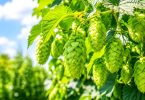
Image Credit: GeekStreet, CC BY-SA 4.0
References
- Juergens UR, Dethlefsen U, Steinkamp G, et al. Anti-inflammatory activity of 1.8-cineol (eucalyptol) in bronchial asthma: a double-blind placebo-controlled trial. Respiratory Medicine. 2003;97(3):250-256. doi:10.1053/rmed.2003.1432
- Fischer J, Dethlefsen U. Efficacy of cineole in patients suffering from acute bronchitis: a placebo-controlled double-blind trial. Cough. 2013;9(1):25. doi:10.1186/1745-9974-9-25
- Kehrl W, Sonnemann U, Dethlefsen U. Therapy for acute nonpurulent rhinosinusitis with cineole: results of a double-blind, randomized, placebo-controlled trial. Laryngoscope. 2004;114(4):738-742. doi:10.1097/00005537-200404000-00027
- Worth H, Dethlefsen U. Patients with asthma benefit from concomitant therapy with cineole: a placebo-controlled, double-blind trial. Journal of Asthma. 2012;49(8):849-853. doi:10.3109/02770903.2012.717657
- Worth H, Schacher C, Dethlefsen U. Concomitant therapy with cineole (eucalyptole) reduces exacerbations in COPD: a placebo-controlled double-blind trial. Respiratory Research. 2009;10(1):69. doi:10.1186/1465-9921-10-69
- Tibballs J. Clinical effects and management of eucalyptus oil ingestion in infants and young children. Medical Journal of Australia. 1995;163(4):177-180.
- Juergens UR. Anti-inflammatory properties of the monoterpene 1.8-cineole: current evidence for co-medication in inflammatory airway diseases. Drug Research. 2014;64(12):638-646.
- Moss M, Oliver L. Plasma 1,8-cineole correlates with cognitive performance following exposure to rosemary essential oil aroma. Therapeutic Advances in Psychopharmacology. 2012;2(3):103-113.
- Murata S, Shiragami R, Kosugi C, et al. Antitumor effect of 1,8-cineole against colon cancer. Oncology Reports. 2013;30(6):2647-2652.
- Khan A, Vaibhav K, Javed H, et al. 1,8-cineole (eucalyptol) mitigates inflammation in amyloid beta toxicated PC12 cells: relevance to Alzheimer’s disease. Neurochemical Research. 2014;39(2):344-352.
- Ciftci O, Ozdemir I, Tanyildizi S, et al. Antioxidative effects of curcumin, β-myrcene and 1,8-cineole against 2,3,7,8-tetrachlorodibenzo-p-dioxin-induced oxidative stress in rats liver. Toxicology and Industrial Health. 2011;27(5):447-453.
- Wang C, Wang H, Li Y, et al. Leaf enclosure measurements for determining volatile organic compound emission capacity from Cannabis spp. Atmospheric Environment. 2019;199:80-87.
Originally published November 8, 2020. Updated August 18, 2026 to lead with the human clinical trial evidence, correct the description of eucalyptol’s chemistry and the labeling of laboratory studies, and add sections on safety and occurrence in cannabis.