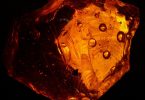







In common cannabis-industry usage, concentrate is the umbrella term for products in which cannabinoids and other resin components have been concentrated. Extract often refers more narrowly to a concentrate produced using ethanol, hydrocarbons, supercritical CO₂, or another extraction medium. Under that working definition, every solvent-based extract is a concentrate, while dry sift, ice-water hash, and rosin are classified as solventless concentrates.
That is an industry convention, not a universal scientific or legal definition. Water is chemically a solvent, even though ice-water hash is called solventless because the process mechanically detaches and filters trichomes rather than dissolving their cannabinoids. “Solventless extract” is also common industry language, which shows that the categories don’t stay neatly separated in practice.
Where the Line Gets Blurry
Colloquial usage isn’t the only place this gets messy – regulatory text doesn’t always draw the same line either. California explicitly takes a broader approach: it defines “extraction” as separating cannabinoids from plant material through chemical or physical means, without confining the term to solvent-based processing. [1] Its definition of “cannabis concentrate” is broader still, expressly including kief, extracts, tinctures, capsules, suppositories, butter, vape cartridges, tablets, shatter, and wax. [1] So while the industry’s working shorthand – extract implies a solvent, concentrate doesn’t necessarily – holds up well enough for everyday use, it isn’t a universal legal definition, and terminology varies across jurisdictions.
What Falls Into Each Category
Depending on the starting material, process, and any post-processing, concentrates include products such as dry sift, ice-water hash, live resin, rosin, hash oil, shatter, wax, and badder. Some of those terms describe the production method; others – like wax and badder – mainly describe texture or consistency rather than a distinct process. Moon rocks are better classified as infused flower, since they combine cannabis buds with a concentrate coating and a kief layer, rather than being a concentrate in their own right.
High-potency inhaled extracts commonly contain roughly 40–90% THC, though concentrations vary substantially by product type. In a 2025 Colorado study, the mean measured potency was approximately 71% THC for concentrate products and 21% for flower. [2] Other products that are legally categorized as concentrates, including tinctures and capsules, are generally labeled in milligrams rather than by potency percentage. Lower processing temperatures can reduce terpene loss, though preservation also depends on pressure, oxygen exposure, processing time, the starting material, and any subsequent refinement – temperature alone doesn’t determine quality, but higher temperatures can drive real losses of terpenes and other minor constituents. [3]
Solvent-based extracts can be produced with ethanol, hydrocarbons such as butane or propane, or supercritical CO₂, which acts as the extraction fluid; some are subsequently distilled to increase cannabinoid purity. Hydrocarbons and ethanol are flammable, residual-solvent levels must be controlled, and several methods require engineered closed-loop equipment. The rosin press, by contrast, uses heat and mechanical pressure to express resin directly from flower, kief, or hash – no processing solvent is introduced during pressing, though the starting material can itself be ice-water hash whose production already involved water. Ice-water hash uses cold water and agitation to detach trichomes, which are then collected through filters; the industry calls both methods solventless because no processing solvent dissolves the target compounds, even though water is physically present during ice-water separation. Hydrocarbon extraction, by comparison, works by dissolving the target compounds out of the biomass directly – see the complete guide to BHO for how that process actually works.
Because inhaled concentrates generally contain much more THC per unit of material than flower, unfamiliar products should be approached with a much smaller amount. Check the labeled potency, take one small inhalation or portion, and wait to judge the effect before using more. [4]
References
- California Code of Regulations, Title 4, § 15000 (Definitions).
- Giordano G, Brook CP, Ortiz Torres M, et al. Accuracy of labeled THC potency across flower and concentrate cannabis products. Scientific Reports. 2025;15:20822. doi:10.1038/s41598-025-03854-3
- Lazarjani MP, Young O, Kebede L, Seyfoddin A. Processing and extraction methods of medicinal cannabis: a narrative review. Journal of Cannabis Research. 2021;3(1):32. doi:10.1186/s42238-021-00087-9
- National Institute on Drug Abuse. Cannabis (Marijuana) Concentrates DrugFacts. 2020.
Last updated September 2026 · Originally published November 15, 2022.
Reviewed by Nani Frenkel, chief editor.