






Last updated on September 2, 2026 · Originally published April 2, 2021
“Dietary cannabinoid” sounds like a marketing phrase. It is in fact the title of a 2008 paper in the Proceedings of the National Academy of Sciences, and it describes something precise: a compound that occurs in everyday food and switches on one of the body’s two classical cannabinoid receptors.
One clarification before anything else, because the word does double duty: “dietary” here means found in food, not useful for dieting. Beta-caryophyllene is not an established weight-loss compound. THCV, which is marketed for appetite suppression, is a different molecule with different pharmacology.
Beta-caryophyllene is a compound you have probably eaten many times that acts on a cannabinoid receptor. The finding is real. It is also narrower than the way it usually gets repeated — and the narrow version is the more interesting one. Our full profile of beta-caryophyllene covers the compound generally; this article is about the dietary cannabinoid claim itself.
Where the Phrase Comes From
The 2008 paper reported that (E)-beta-caryophyllene binds selectively to the cannabinoid type 2 (CB2) receptor at nanomolar affinity, and that it functions as a CB2 agonist — meaning it does not merely occupy the receptor but activates it. [1]
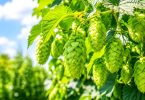
What made that notable was where the compound is found. BCP is not exotic. It occurs in black pepper, cloves, hops, rosemary, copaiba, cinnamon, basil, oregano and many other edible plants, [1,2] and in the United States it is separately permitted as a flavouring substance in food. People have been eating it for as long as they have been cooking with spices. That is what “dietary” means here: a compound with cannabinoid-receptor activity that arrives through ordinary food rather than through cannabis.
Is BCP a Terpene or a Cannabinoid?
Both, and the question is less of a contradiction than it appears.
Structurally, BCP is a terpene. Its formula is C15H24 — carbon and hydrogen only, built from three isoprene units, which is the definition of a sesquiterpene. Nothing about the CB2 finding changes that, and we cover the wider distinction in our article on cannabinoids and terpenes.
“Cannabinoid” is the looser word. It can mean a structural class — the C21 compounds like THC and CBD that cannabis produces — or it can mean, functionally, any compound that acts on cannabinoid receptors. BCP is a cannabinoid in the second sense and not the first. The 2008 paper itself uses both descriptions, calling BCP a plant volatile and a cannabinoid in the same breath, because both are accurate.
That distinction matters beyond pedantry, because it is what makes BCP genuinely unusual rather than merely interesting: it reaches a cannabinoid receptor from an entirely different chemical starting point.
What the Research Showed
Three findings from the original paper are worth stating precisely.
It is CB2-selective. BCP binds CB2 with a Ki of 155 nM, competing at the same site on the receptor that THC occupies. In that assay, BCP showed no significant CB1 binding. Consistent with its strong preference for CB2, it does not produce THC-like intoxication — which is the single most important practical fact about it. [1]
A note on “selective”: CB1 and CB2 are the two classical cannabinoid receptors, the ones with their own genes and formal classification. They are not the only proteins the endocannabinoid system is now thought to involve — GPR55, sometimes informally called CB3, along with TRPV1 and others, are all under discussion. BCP is selective between CB1 and CB2. It is not necessarily selective for cannabinoid receptors over everything else: preclinical studies also implicate PPARα and PPARγ pathways, a separate mechanism that may contribute to the anti-inflammatory effects attributed to it. [4]
The effect is receptor-dependent. Oral BCP at 5 mg/kg reduced inflammation in mice. In mice genetically lacking CB2 receptors, the same dose did not. That comparison is what turns an association into a mechanism. [1]
Among cannabis terpenes, its affinity is exceptional. The same study tested the other major cannabis terpenes and found none of them displaced the receptor probe at either CB1 or CB2. Humulene, a separate sesquiterpene often listed beside it on a certificate of analysis, binds CB2 around a thousand times more weakly. [1]
That last point needs updating, though, because it is often stretched into “no other terpene affects cannabinoid receptors” — and later work does not support that. A 2023 study using a functional assay rather than a binding one found that all sixteen cannabis terpenes tested produced some CB1 activation, at roughly 10 to 50% of the response produced by THC. A 2026 follow-up reported partial CB2 activation by many of the same terpenes. [5,6] These findings are not necessarily inconsistent with the earlier binding results: orthosteric-probe displacement and receptor-linked signalling are different measurements. The functional findings nevertheless come from one research group and one heterologous expression system, and await broader replication.
What survives for BCP is narrower and still notable — it binds the CB2 site directly, at nanomolar affinity, in a way no other cannabis terpene has been shown to match.
And on the weight question raised at the top: the one randomised human trial gave 100 mg daily to fifty-two women with obesity and food addiction for eight weeks. Food-addiction scores improved against placebo, but there was no significant effect on body composition, anthropometric measures, appetite, eating behaviour or dietary intake. [7] Obesity-related work in mice continues; the human result, so far, is not a weight-loss result.
What It Does Not Mean
Two things get lost when this finding is summarised.
The dose is not a culinary one. The mouse study used 5 mg/kg orally; the human obesity trial used 100 mg of isolated BCP daily. Ordinary culinary exposure is much lower than these experimental doses. “Dietary cannabinoid” describes where the molecule occurs, not whether food supplies a pharmacological dose.
CB2 being a drug target is not the same as BCP treating things. CB2 activation is studied as a potential strategy for inflammation, pain, atherosclerosis and osteoporosis, and that context appears in the 2008 paper’s opening, and in a companion commentary by its lead author on what dietary CB2 action might mean. [3] It is a statement about the receptor, not a list of things beta-caryophyllene has been shown to do. Work in animal models has explored BCP in neurodegenerative disease, including effects on amyloid plaques and dopaminergic neurons, [4] but that research is preclinical and should be read as a reason to keep investigating rather than a result.
Why It Still Matters
Stripped of the accretions, the finding holds up well. A common food compound binds and activates CB2 with nanomolar affinity, does not produce THC-like intoxication, and produced a CB2-dependent anti-inflammatory effect in mice. In the original binding study, caryophyllene oxide and the close structural relatives tested did not match BCP’s high affinity for the CB2 binding site — which is what distinguishes it among the terpenes, rather than any claim that the others do nothing at all.
That is a smaller claim than the one usually made for beta-caryophyllene. It is also the only one the evidence supports, and it is quite strange enough on its own: the spice rack turns out to contain a cannabinoid, and it has been there the whole time.
References
- Gertsch J, Leonti M, Raduner S, Racz I, Chen JZ, Xie XQ, Altmann KH, Karsak M, Zimmer A. Beta-caryophyllene is a dietary cannabinoid. Proceedings of the National Academy of Sciences. 2008;105(26):9099-9104. doi:10.1073/pnas.0803601105
- Hartsel JA, Eades J, Hickory B, Makriyannis A. Cannabis sativa and Hemp. In: Gupta RC, ed. Nutraceuticals: Efficacy, Safety and Toxicity. Boston: Academic Press; 2016:735-754. doi:10.1016/B978-0-12-802147-7.00053-X
- Gertsch J. Anti-inflammatory cannabinoids in diet: towards a better understanding of CB2 receptor action? Communicative & Integrative Biology. 2008;1(1):26-28. doi:10.4161/cib.1.1.6568
- Francomano F, Caruso A, Barbarossa A, et al. β-Caryophyllene: a sesquiterpene with countless biological properties. Applied Sciences. 2019;9(24):5420. doi:10.3390/app9245420
- Raz N, Eyal AM, Zeitouni DB, Hen-Shoval D, Davidson EM, Danieli A, Tauber M, Ben-Chaim Y. Selected cannabis terpenes synergize with THC to produce increased CB1 receptor activation. Biochemical Pharmacology. 2023;212:115548. doi:10.1016/j.bcp.2023.115548
- Raz N, Eyal AM, Fahoum-Khalefa N, Tauber M, Ben-Chaim Y. Selective activation of cannabinoid receptors by cannabis terpenes. Biochemical Pharmacology. 2026;243(Pt 1):117498. doi:10.1016/j.bcp.2025.117498
- Alizadeh S, Djafarian K, Mofidi Nejad M, Yekaninejad MS, Javanbakht MH. The effect of β-caryophyllene on food addiction and its related behaviors: a randomized, double-blind, placebo-controlled trial. Appetite. 2022;178:106160. doi:10.1016/j.appet.2022.106160
Updated September 2, 2026: this article was reviewed and expanded. The description of what the 2008 paper reported was made precise, claims about conditions the paper did not test were removed, and the dose context was added. Reviewed and edited by Nani Frenkel, chief editor.