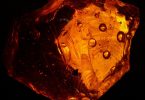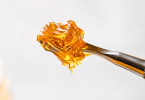







Walk down a dispensary’s concentrate shelf and you’ll see the same butane hash oil sold under wildly different names — shatter, wax, budder, crumble, sugar. Same starting plant, same solvent, same basic extraction. So why does one jar look like a sheet of amber glass and the jar right next to it look like cake frosting?
The answer has almost nothing to do with the extraction itself and almost everything to do with what happens in the hour or two afterward.
The Same Oil, Two Different Fates
BHO extraction starts the same way regardless of what the finished product will look like. Butane is passed through cannabis flower or trim in a closed-loop system, stripping cannabinoids and terpenes from the plant material and leaving behind a butane-saturated crude oil. That crude oil then goes into a vacuum oven for purging — the step where residual butane is evaporated off until what’s left meets safety thresholds for residual solvent.
It’s during purging that the texture gets decided. If the oil is left completely undisturbed while the solvent evaporates, the cannabinoids settle into a flat, stable, glass-like sheet. That’s shatter. If the oil is agitated — whipped, stirred, or scraped — during that same purging window, the disruption changes how the cannabinoids solidify, producing a softer microcrystalline structure instead of a continuous glass-like sheet. The result is opaque, crumbly, and noticeably softer to the touch. That’s wax.
Temperature, vacuum level, and the timing of agitation all influence the final texture. Lower purging temperatures, for instance, tend to keep the oil from fully hardening, which is part of why a wax concentrate stays workable rather than setting into something brittle. The chemical composition changes relatively little between the two; what changes much more dramatically is the material’s physical structure — and that structure is what determines how easy a concentrate is to handle, scoop, and dose.
Why Wax Looks Opaque and Shatter Looks Clear
Here’s a point of confusion worth clearing up, because it drives a lot of bad purchasing instinct: people tend to read clear as pure and opaque as low-quality, and for wax vs shatter that assumption is simply wrong.
Wax appears opaque for the same reason whipped cream looks white while liquid cream does not. Tiny structural irregularities — the nucleation sites and trapped gas introduced by whipping — scatter incoming light in all directions instead of letting it pass straight through. That light-scattering is what gives the concentrate its lighter, matte appearance, even though its chemical composition may be nearly identical to a transparent shatter made from the same oil. Clarity is a story about physical structure, not chemical purity. A cloudy wax and a glassy shatter poured from the same crude can carry effectively the same cannabinoid and terpene content.
Why Producers Choose Wax Over Shatter
From a consumer standpoint, the appeal of wax comes down to handling. Shatter’s glassy structure means it has to be broken or cut, often requiring a metal dabber and a bit of care. Wax, by contrast, scoops easily straight out of the container — there’s no snapping a piece off a brittle sheet, no risk of shards. For people new to concentrates, or anyone who just wants a faster, less fussy dabbing routine, that difference in handling is often the deciding factor over potency or flavor.
There’s also a terpene argument worth taking seriously, though it’s less settled than the texture explanation. Some extractors and consumers report that the whipping process used to make wax helps retain more of the lighter, more volatile terpenes that can otherwise be lost during a long, undisturbed shatter purge. The mechanism is plausible — agitation can shorten the time the oil spends exposed to heat and vacuum — but rigorous side-by-side terpene-retention data comparing wax and shatter from the same starting material is still thin. Treat the flavor claim as a reasonable hypothesis rather than an established fact until better testing exists.
What’s Actually in the Jar
Potency-wise, a butane hash oil wax typically tests around 70 to 90% THC, putting it well above flower (which usually runs 15-30%) and in the same general range as shatter, since both come from the same crude oil. The texture difference doesn’t reliably predict potency — a well-made wax and a well-made shatter from the same extraction run will often land close to each other on a certificate of analysis.
What matters more than texture for judging any BHO concentrate is the testing behind it. Because wax undergoes additional handling during whipping, good manufacturing practice becomes especially important — but that’s an argument about production hygiene, not about the texture being inherently riskier. Regardless of whether a concentrate is glassy or opaque, consumers should rely on batch-specific laboratory testing rather than appearance when judging quality. A trustworthy certificate of analysis should show cannabinoid content close to the label claim, confirm THC is within legal limits, and include contaminant screening for residual solvents, pesticides, and microbials — not potency numbers alone.
Wax Isn’t the Only Soft Texture
It’s worth distinguishing wax from its close relatives, since dispensary labeling isn’t always consistent. Budder (sometimes spelled badder) is whipped further than standard wax, producing a smoother, creamier consistency closer to cake frosting. Crumble is purged at different temperature and vacuum settings that leave it drier and more porous, breaking apart into small pieces rather than scooping in one mass. All three — wax, budder, crumble — are agitation-based textures, distinguished from each other mostly by degree of whipping and final moisture content, rather than by any fundamental difference in how they’re made. For the fully crystalline end of that spectrum, where cannabinoids really do form ordered crystals, see our piece on THCA diamonds.
None of this is marketing distinction without a difference, but it’s also not as significant as it might appear on a dispensary menu. The underlying oil, in most cases, is functionally the same. In most cases, you’re choosing texture and handling characteristics rather than fundamentally different chemistry.
The Bottom Line
BHO wax isn’t a separate extraction method or a different starting material — it’s the same butane hash oil as shatter, shaped by a different choice made during the final purging step. If you prefer scooping over snapping, this kind of BHO concentrate is the more practical option. If you prefer maximum visual clarity and a longer shelf life, shatter generally remains more stable during storage because its rigid, glassy structure changes texture more slowly at room temperature. Either way, the thing worth checking before you buy isn’t the texture — it’s whether the product comes with a batch-specific certificate of analysis confirming what’s actually in it.
This article is part of T&T’s complete guide to BHO extraction, covering how butane hash oil is made and purged in professional closed-loop systems.