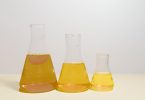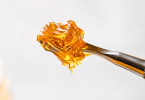







For edibles, the honest answer is that the extraction method matters far less than most people think — because the majority of commercial edibles aren’t made from raw BHO or CO2 extract at all. They’re made from distillate refined a step further, at which point the original solvent barely influences the finished gummy. Where choosing BHO or CO2 for edibles does matter is flavor carryover, infusion consistency, and how much of the plant’s character you want to survive into the final product.
There are many effective ways to extract cannabis oil from raw plant material, but two dominate the industry: butane extraction (BHO) and CO2 extraction. In the BHO method, pressurized solvent is introduced to raw plant material to strip out cannabinoids and terpenes, and the resulting solution is then purged of residual solvent using heat and vacuum pressure. In CO2 extraction, raw plant material is exposed to “supercritical” CO2 under pressure, then run through winterization, a clean-up step that removes plant waxes and lipids to leave a more refined, cannabinoid-rich extract.
What Extraction is Actually Used for Gummies?
Most of the time, neither BHO nor CO2 in their raw form. Both are usually just the first stage in a longer chain: flower is extracted into crude oil, and that crude is then distilled into THC distillate — a near-pure cannabinoid oil, typically 85 to 95% THC, with the terpenes, waxes, and residual solvents stripped away. That distillate is what ends up in the gummy. Manufacturers lean on it heavily for reasons that are practical rather than ideological: extract type tends to be chosen by cost per milligram of THC, and most edibles are produced with distillate partly because high-THC distillate carries little to no flavor to interfere with the food. Once oil has been distilled to that level of refinement, whether it started as a butane extract or a CO2 extract has far less influence on the finished edible than consumers tend to assume.

That reframes the whole comparison. If you’re eating a mass-market gummy, you’re most likely eating distillate whose extraction origin has been refined into near-irrelevance. The BHO-versus-CO2 distinction matters most for products that deliberately keep more of the original extract intact — full-spectrum or live-resin edibles that trade some flavor-neutrality for terpene character.
Does CO2 or BHO Taste Better in an Edible?
This is where extraction choice earns its keep, when it matters at all. The more of the raw extract that survives into the final product, the more its flavor carries through. Higher cannabinoid concentration generally means lower concentration of terpenes and the aromatic compounds that give cannabis its taste, so a heavily refined extract contributes less flavor to fight with the recipe. Winterized CO2 oil and well-purged BHO can both be relatively neutral; the stronger the strain character you want in the finished edible, the more the extraction and post-processing choices start to show up on the palate. For a gummy meant to taste like candy rather than cannabis, that’s exactly why so many manufacturers refine all the way to distillate regardless of which solvent they started with.
Terpene preservation, the headline selling point when comparing concentrates for dabbing, matters much less in most edibles. A dab is judged largely on flavor and aroma; a fruit gummy is not. Unless a product is specifically built around retaining the plant’s terpene profile, the terpene advantages that distinguish one extraction method from another in a dab rig are largely lost — either stripped out during refinement or buried under the food’s own flavor.
Is BHO Safe to Use in Edibles?
Yes, when it’s properly purged and lab-verified — it just carries one testing requirement CO2 doesn’t. Because BHO uses a volatile hydrocarbon solvent, any BHO destined for consumption has to pass residual solvent testing to confirm the butane or propane has been purged to safe levels. State regulations set strict limits on those residuals, and professionally produced BHO is routinely tested to confirm it falls well below them before products reach consumers. CO2 extraction avoids the need to remove and verify residual hydrocarbon solvents, although CO2 extracts are still routinely tested for potency, pesticides, heavy metals, and microbial contamination as part of standard regulatory compliance. In other words, CO2 skips one category of testing, not the testing regime as a whole.
Decarboxylation — the heat step that converts THCA into active THC — happens during infusion or baking regardless of which solvent produced the oil, so it isn’t a point of difference between the two methods. It’s a processing step every edible goes through, not a reason to prefer one extraction over the other.
So Which Should You Choose?
For most edibles, cost and workflow decide it, not chemistry. Professional BHO systems generally cost substantially less than supercritical CO2 systems, though exact pricing depends heavily on scale and automation, and BHO’s lower entry cost comes with the added residual-solvent testing step. CO2’s appeal for edibles is that it produces a clean extract without a hydrocarbon purge to validate, which simplifies compliance. But since so much edible production refines all the way to distillate anyway, the choice between them often comes out in the wash for the finished gummy — while BHO remains the more popular starting point for smoke-friendly products like waxes and live resin, where flavor and potency matter more than a solvent-free label.
Whichever method produces the oil, testing is what turns a claim of safety into a verified fact. Reputable producers send every batch to a lab for potency, residual solvent, and contaminant screening, and for a category where “clean” is a marketing word as often as a verified one, the difference between cannabis extracts and cannabis concentrates is worth understanding before trusting any product’s purity claims. A certificate of analysis is the only real way to confirm what a label promises.
This article is part of T&T’s complete guide to BHO extraction, covering the fundamentals of how butane hash oil is extracted and purged.
Originally published January 2017. Updated July 2026 to refocus on edibles specifically, add the role of THC distillate in commercial production, and correct outdated claims about BHO and CO2.