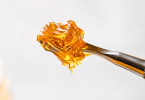





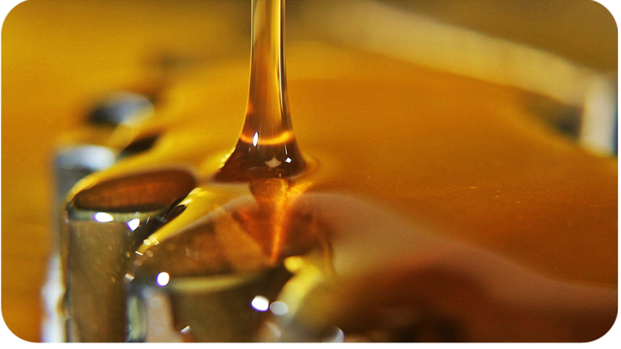

Cannabis extraction doesn’t just concentrate cannabinoids and terpenes — it can concentrate whatever else is on the plant, pesticides included. Because many pesticides can co-extract with cannabinoids, residues present in flower may become more concentrated in the finished extract, though the extent depends on the pesticide and the extraction process. In a Cannabis Safety Institute analysis of Oregon testing data, mean levels of piperonyl butoxide and bifenthrin ran roughly ten times higher in concentrates than in flower. That’s the core reason pesticide removal matters more for concentrates than for flower, and why remediation methods like flash chromatography have become part of specialized extract-processing workflows.
Why Does Cannabis Have a Pesticide Problem?
The root of the problem is fragmented regulation. Adult-use marijuana remains federally prohibited. Under an April 2026 final rule, marijuana covered by state medical-marijuana licenses and certain FDA-approved plant-derived THC products were placed in Schedule III, while the separate proposal to reschedule marijuana more broadly remains pending. The EPA still has no pesticide registrations specifically for marijuana, leaving states to establish their own approved-product lists, testing panels, and residue limits; hemp is regulated separately at the federal level. Like any crop, cannabis is vulnerable to pests and disease: spider mites that reproduce in under a week, powdery mildew that races through a greenhouse. Faced with those threats and no uniform sanctioned toolkit, some growers have historically reached for pesticides intended for other crops, sometimes at alarmingly high levels.
The contaminants repeatedly identified in cannabis testing include a familiar group. Myclobutanil, a systemic fungicide sold as Eagle 20 and used against powdery mildew, is the one that draws the most concern. Imidacloprid, an insecticide the World Health Organization classifies as moderately hazardous, appears frequently, as do insecticides like abamectin and spiromesifen.
Why Is Myclobutanil a Particular Concern?
Myclobutanil deserves particular attention because it can form hydrogen cyanide and other hazardous compounds under high-temperature decomposition — a real concern for a fungicide that might end up in a dab or a vaporizer. Exactly how much forms during smoking, vaping, or dabbing depends on the residue level and heating conditions, and remains poorly quantified. It’s worth being precise rather than sensational: Health Canada’s analysis of trace-level contamination concluded that the additional cyanide was negligible compared with what cannabis smoke itself produces — though that conclusion applied to those measured trace concentrations, not to heavily contaminated concentrates.
That distinction is where the real problem lies. Myclobutanil is banned for use on cannabis in many states precisely because of that thermal decomposition, and it may co-extract with cannabinoids and persist through downstream processing rather than simply washing out. Routine steps such as winterization or distillation should not be assumed to remove it reliably. A concentrate made from contaminated flower may therefore retain — or potentially amplify — myclobutanil residues, which is exactly the scenario the trace-level reassurance does not address.
How Is Pesticide Removal Actually Done?
The most economical approach is to avoid the problem upstream — start with clean, tested biomass — but that isn’t always possible, which is where remediation comes in. One of the most established remediation options is flash or preparative chromatography, a technique the pharmaceutical and chemical industries have used for decades to purify complex mixtures. It separates compounds based on their behavior in a column: the extract is pushed through a stationary phase, and because different molecules move through at different rates, some pesticides can be separated out from the cannabinoids and collected away from the desired fraction. How well it works is pesticide-specific — a 2023 benchtop study found that a C18 chromatographic method could separate seven of eleven tested pesticides from 25 of 26 cannabinoids, while pyrethrins, permethrin, and piperonyl butoxide required additional fractionation or purification.
Vendor demonstrations have reported larger reductions on particular test mixtures, but those results should be read as method-specific case studies rather than evidence that chromatography will remediate every contaminated extract. Outcomes depend on the pesticides present, the column chemistry, loading conditions, fraction collection, and the applicable action limits — and a reduction of well over 99% can still leave an individual pesticide above a jurisdiction’s limit. Remediation is a correction for a problem better avoided at the source, not a guarantee that any contaminated oil can be made compliant.
For a closer look at the separation technique itself, see our piece on flash chromatography in cannabis purification, and for an alternative, enzyme-based approach to breaking down certain pesticides, see our article on detoxifying pesticides.
What This Means for Buyers
The practical takeaway is straightforward: only batch-specific testing performed after remediation can show whether the pesticides included in the laboratory’s panel fell below the applicable action limits. A COA reports the compounds in that lab’s panel and the results for the submitted sample — nothing more, and state panels and limits have historically varied substantially. So buyers should look for a batch-specific COA from an accredited laboratory that includes the applicable pesticide panel, not potency results alone — and because extraction can amplify certain pesticide residues rather than reliably removing them, that screening is especially important for concentrates.
This article is part of T&T’s complete guide to BHO extraction, covering how butane hash oil is extracted, purged, and tested.
Originally published 2018. Updated July 2026 to add current data on how extraction can concentrate pesticide residues, a more accurate account of myclobutanil’s thermal-decomposition risk, and peer-reviewed evidence on chromatographic remediation.